You packed for sunshine. Instead, you're staring at a grey sky from your villa terrace, the pool is overflowing, and today's plan just washed away.
Take a breath. A rainy day in Bali is not a wasted day, it simply needs a different plan.
Some of the island's best experiences happen indoors, and they are often calmer when the weather keeps the crowds home. Here are seven rain-friendly ideas, plus a few safety tips for when the sky really opens up.
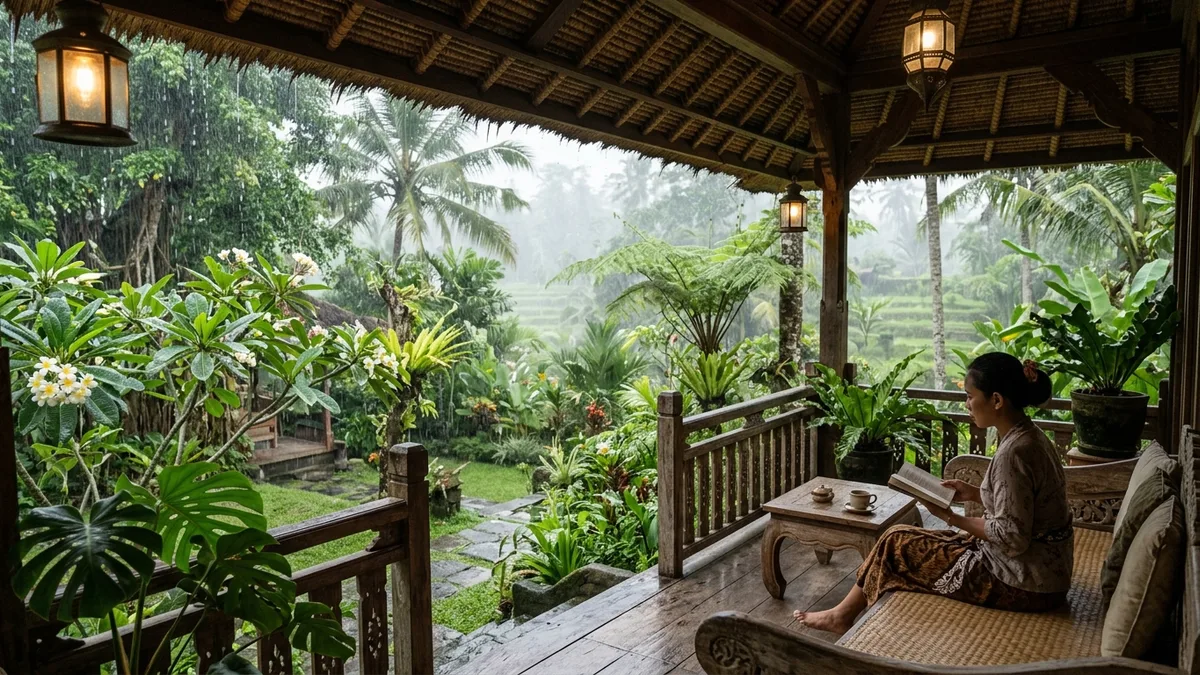
1. Sink Into a Balinese Spa Treatment
A traditional Balinese massage uses long, flowing strokes and firm pressure to loosen tired muscles. Many spas add aromatic oils, a body scrub, or a warm flower bath.
Honestly, rain makes it better. Listening to a downpour while someone works the knots out of your shoulders is hard to beat.
Spas are easy to find in Seminyak, Canggu, Ubud, and Uluwatu. Choose one with fully enclosed treatment rooms and ask about hotel pickup, because walking to your appointment in a storm defeats the purpose.
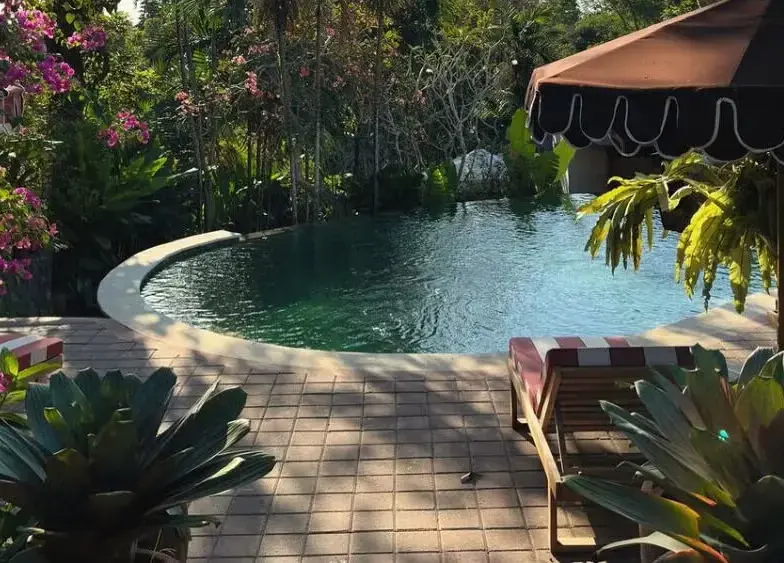
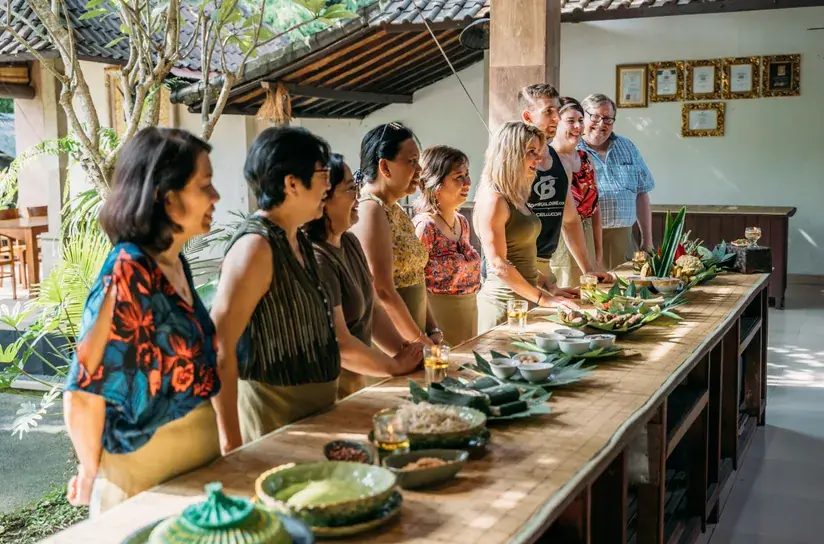
2. Join a Balinese Cooking Class
Balinese food starts with base genep, a fragrant spice paste built from ingredients like turmeric, galangal, and chili. A good class teaches you to make it from scratch, then use it in dishes such as sate lilit.
Many classes open with a market visit. That's fun in dry weather and soggy in heavy rain, so ask whether the market stop is optional and whether the cooking area has a roof.
You'll leave with full recipes and a very full stomach. It's also one of the easiest rainy-day activities for families, since kids love getting their hands messy.
3. Make Your Own Silver Jewelry in Celuk
Bali's gold and silver communities are mostly found in the villages of Gianyar, especially Celuk, Mas, and Ubud. Workshops there let you design and shape your own piece under a local silversmith's guidance.
Sessions typically last around three to four hours, and you take your finished ring, pendant, or bracelet home. It's quiet, covered, and surprisingly absorbing.
Prefer to browse instead of craft? Celuk's showrooms are indoors, and craft-village stops like Celuk and Mas already appear on some Ubud day routes, such as an Ubud area tour.

4. Try Woodcarving, Batik, or Painting in Mas and Ubud
Mas village is famous for its woodcarvers, and the Ubud area is full of small studios where you can try the craft yourself. Even a short lesson makes you appreciate the detail in every temple door and statue you see around the island.
Museum Puri Lukisan in Ubud has regularly hosted workshops in painting, carving, and batik making. Schedules change, so check what's running before you go.
Wax-resist batik and painting are especially good for rainy afternoons. You sit, you create, and you carry home something no gift shop sells.
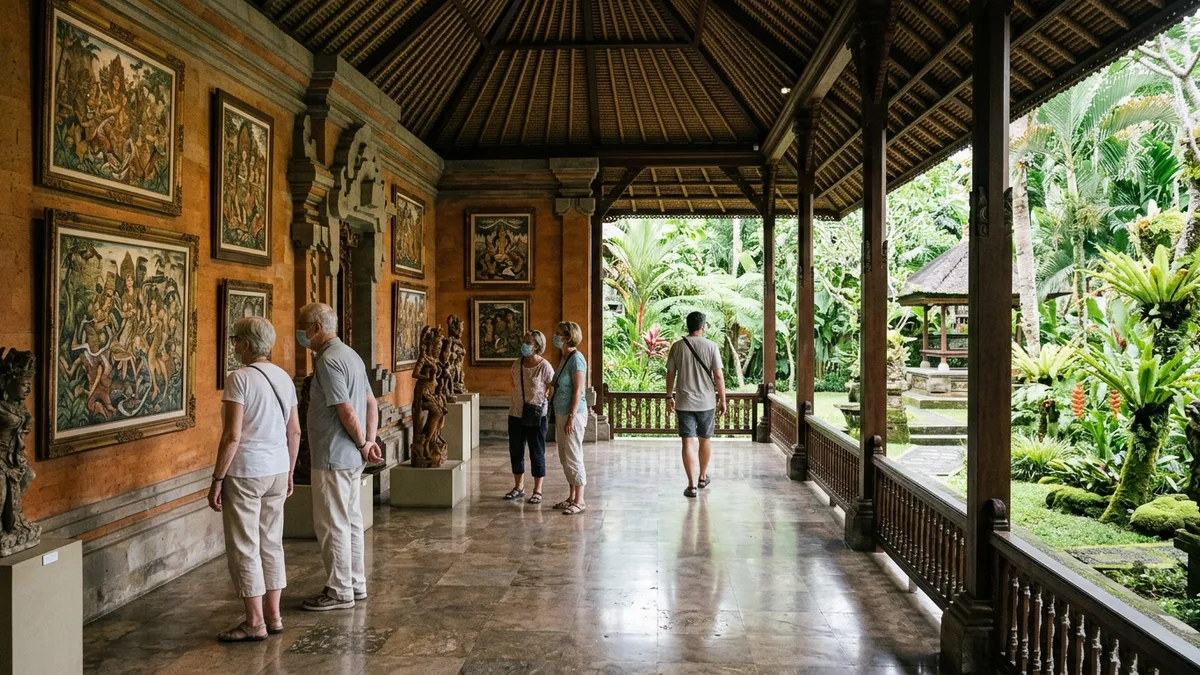
5. Wander Ubud's Art Museums
Ubud is the island's art capital, and its museums are made for wet weather. Museum Puri Lukisan, one of Ubud's oldest, shows traditional Balinese paintings and woodcarvings across several buildings near the Ubud Palace.
Neka Art Museum sits on the Campuhan side of town and traces the development of Balinese art. Agung Rai Museum of Art (ARMA) in Pengosekan doubles as a cultural center, while the Blanco Renaissance Museum is dedicated to a single, very flamboyant artist.
Pick two rather than cramming in all four, because the museums are spread out and short walks between buildings can still get you wet. Pair them with a guided bali cultural tour and the art starts to connect with the temples and craft villages around it.
6. Explore Museum Pasifika in Nusa Dua
Staying in South Bali? Museum Pasifika, inside the ITDC complex in Nusa Dua, displays art from across the Asia-Pacific region in several pavilions.
It's spacious, air-conditioned in places, and rarely busy. That makes it a smart pick when the beach is closed by weather.
Follow it with a long lunch at an indoor restaurant in Nusa Dua, and the day takes care of itself.
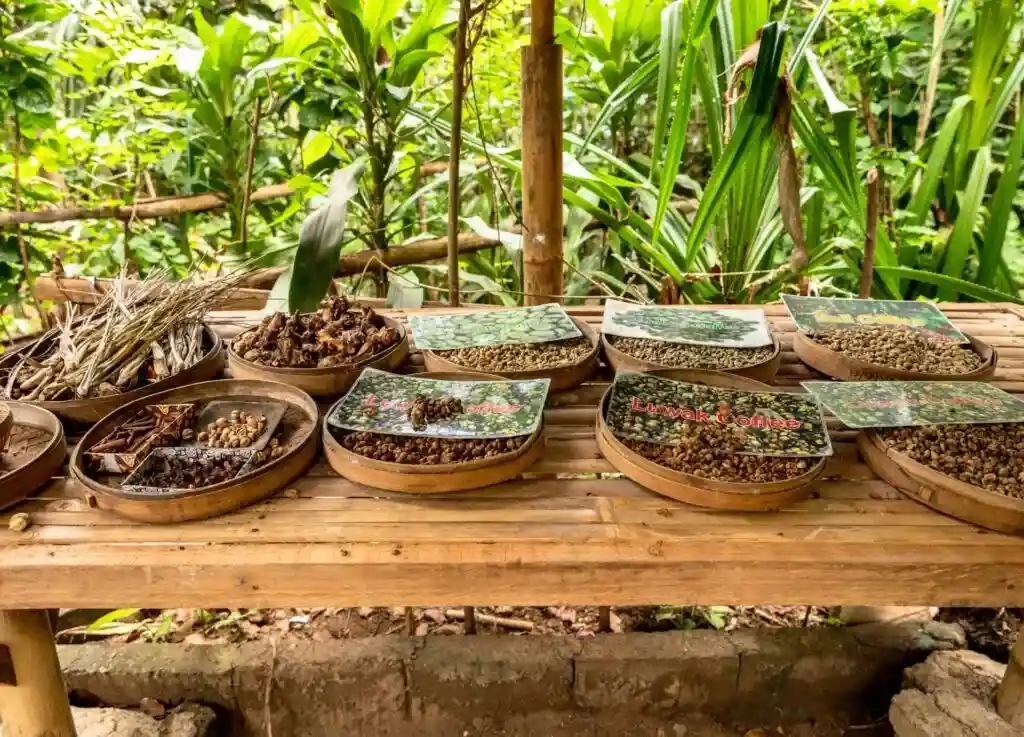
7. Slow Down With a Coffee and Herbal Tea Tasting
Bali's plantations offer tastings of local coffee and herbal teas, usually from covered seating overlooking the gardens. A little mist over the trees only adds to the mood.
You'll also see how beans are roasted by hand and how spices and tea leaves grow. It's a gentle stop that fits neatly between a workshop and a museum.
If luwak coffee is on the menu, ask how it's sourced, and skip any place that keeps civets in small cages.
Staying Safe When the Rain Gets Serious
Light showers are one thing. Heavy, all-day rain changes how you should move around the island.
- Skip waterfalls and rivers. Water levels can rise fast and trails turn slick.
- Check sea conditions first. BMKG, Indonesia's weather agency, has issued warnings that disrupted boat crossings, including to Nusa Penida.
- Respect the hills. Heavy rain has triggered landslides in parts of central and eastern Bali, so leave extra time on mountain roads.
- Be flexible with the highlands. If cloud sits on the caldera, a kintamani volcano tour works best when you swap viewpoints for indoor stops and wait for a clear window.
- Avoid scooters. Wet roads, flooded drains, and poor visibility are a bad mix.
- Watch your footing. Temple steps and museum paths get slippery, so wear shoes with real grip.
- Pack smart. A light rain jacket, a dry bag for your phone and passport, and a spare pair of socks go a long way.
Save your hotel's number and your driver's number in your phone. Indonesia's national emergency line is 112, but its rollout in Bali is still in progress, so local contacts are often faster.
Why a Private Driver Works Better Than Group Tours or Taxis on Wet Days
Group tours run on a fixed schedule. When rain arrives, the route usually doesn't change, so you may still end up at a muddy viewpoint with a busload of strangers.
Taxis and ride-hailing get you from A to B, but in heavy rain availability can tighten and waits can stretch. Drivers also may not know which roads are flooding that day.
With a private setup, you decide. You can swap a waterfall for a cooking class, linger at a museum, or stop for tea when the downpour peaks. At Bali Nusa Tour, drivers rearrange the day around the weather, and a bali private driver means you never wait on a roadside in the rain.
Our private bali tours are built around the same flexibility, so one wet forecast doesn't ruin the whole day.
Where to Base Your Rainy Days
- Ubud and Gianyar: the best concentration of craft villages, art museums, and cooking classes.
- Canggu and Seminyak: spas, wellness studios, and plenty of indoor cafes.
- Nusa Dua and the south: Museum Pasifika, spas, and relaxed indoor dining.
- The highlands: beautiful in the mist, but treat plans there as flexible.
How to Choose a Trustworthy Tour Provider in Bali
A rainy day is when a weak provider shows its true colors. These checks help you avoid the cut-rate trap that ends in poor service.
- Look for a verifiable business. A real address, working contact details, and a proper registration beat a social media page with no history.
- Ask for itemized inclusions. Fuel, parking, entrance tickets, and water should be listed clearly, as we do on every Bali Nusa Tour page.
- Ask about the weather plan. A good provider can explain exactly how the route changes if it pours.
- Read independent reviews. Look for detailed, recent comments, not just star counts.
- Be wary of rock-bottom rates. They often hide shopping stops, commissions, or surprise fees later.
- Avoid large upfront payments to personal accounts without paperwork or receipts.
Who These Rainy-Day Plans Suit Best
Couples will love the spa and silver workshop combination. Families get hands-on fun from cooking and craft classes.
Solo travelers meet people easily in workshops, and culture lovers can fill days with Ubud's museums. First-timers gain the most, since a wet forecast can feel like a disaster until you have a plan.
If your heart is set on beach time only, you may want to wait for clearer skies.
Frequently Asked Questions
Is Bali still worth visiting when it rains a lot?
Yes. Rain mostly changes what you do, not whether the trip is good. Most activities in this guide run normally in wet weather, and the island is quieter and greener.
What are the best things to do in Bali with kids when it rains?
Cooking classes and hands-on craft workshops top the list. Ask about minimum ages for silver-making, since policies vary by workshop.
Do private tours still run when it's raining?
Typically yes, with adjustments. With Bali Nusa Tour, the route is simply reshuffled on the day. Waterfalls, boat trips, and viewpoints are the stops most likely to be swapped for indoor options.
Can I fit several of these activities into one day?
Easily. A craft workshop in Celuk or Mas in the morning, lunch in Ubud, and a museum in the afternoon is a comfortable rhythm for a rainy day.
Final Thoughts
Rain is when Bali's slower, more creative side comes forward. You'll meet artisans, learn something new, and see the island from a different angle.
If you'd like a dry, stress-free route built around these ideas, a private bali tour can be arranged around your hotel and the day's forecast. Or send your wish list to Bali Nusa Tour and we'll shape a custom route that bends with the weather.
Plan Your Flexible Bali Tour
Rain or shine, explore Bali on your terms with an experienced local driver who adapts your day around the weather.
Explore Private Tour Packages