There's a specific kind of bad feeling that comes from counting your rupiah after a currency exchange and realizing the math doesn't add up. By the time you notice, whoever handed you the cash is usually long gone.
Money scams in Bali aren't common enough to ruin a trip, but they're common enough that a bit of preparation genuinely pays off, sometimes literally.
This guide covers the practical side: where to exchange money safely, how to avoid ATM skimming, and how much cash actually makes sense to carry day to day.
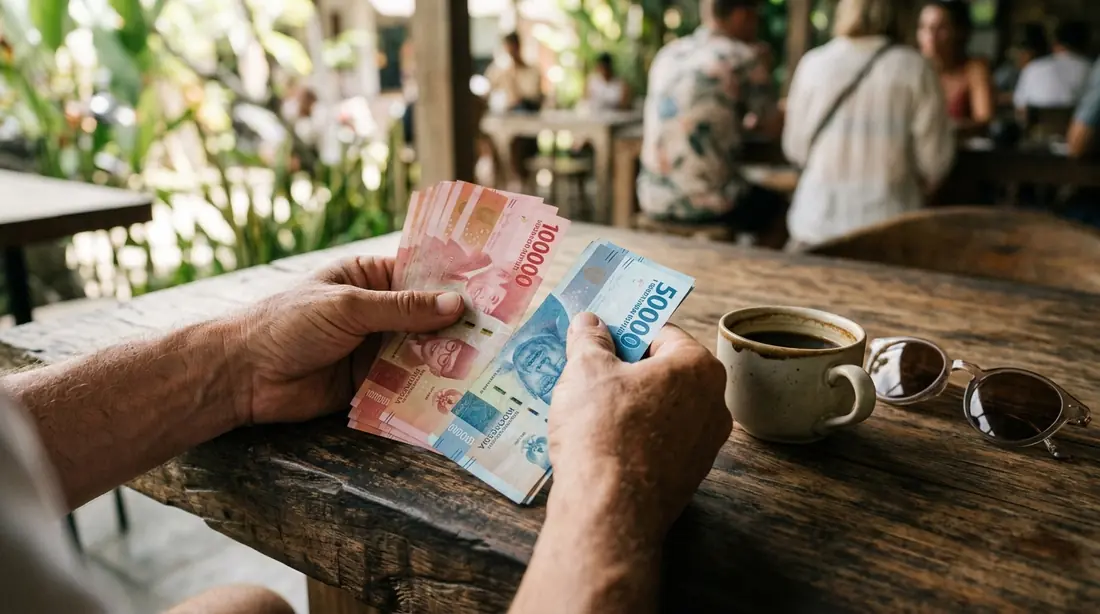
Why Bali's Money Scams Work
Most of the tricks here rely on speed and confusion rather than anything technically sophisticated. A rushed count, a distracting conversation, or a calculator angled just slightly out of view is usually all it takes.
The unlicensed money-changer stalls along busy tourist strips are the most commonly reported source of this, sandwich-board signs advertising rates that look noticeably better than everyone else's, which is usually the first sign something's off.
Slowing down and knowing what to look for closes most of this gap. None of it requires being suspicious of everyone, just knowing which signals actually matter.
Finding a Legitimate Money Changer
Indonesia's authorized money changers are officially known as PVA Berizin (Pedagang Valuta Asing Berizin), a licensing status issued by Bank Indonesia. Legitimate operators are required to display their permit and signage clearly at the counter.
A few things worth checking before you hand over any cash:
- Look for a visible PVA Berizin certificate and registration number on display, not just a generic "money exchange" sign.
- Legitimate operators use computerized systems and print a proper receipt, not a handwritten note.
- They're usually standalone businesses or located in shopping centers, rather than tucked inside a souvenir shop or phone credit counter.
- If a rate looks noticeably better than everywhere else nearby, treat that as a red flag rather than a good deal.
Once you're at the counter, count the cash yourself before walking away, and don't feel rushed to do it quickly. A legitimate operator won't mind you taking an extra thirty seconds.
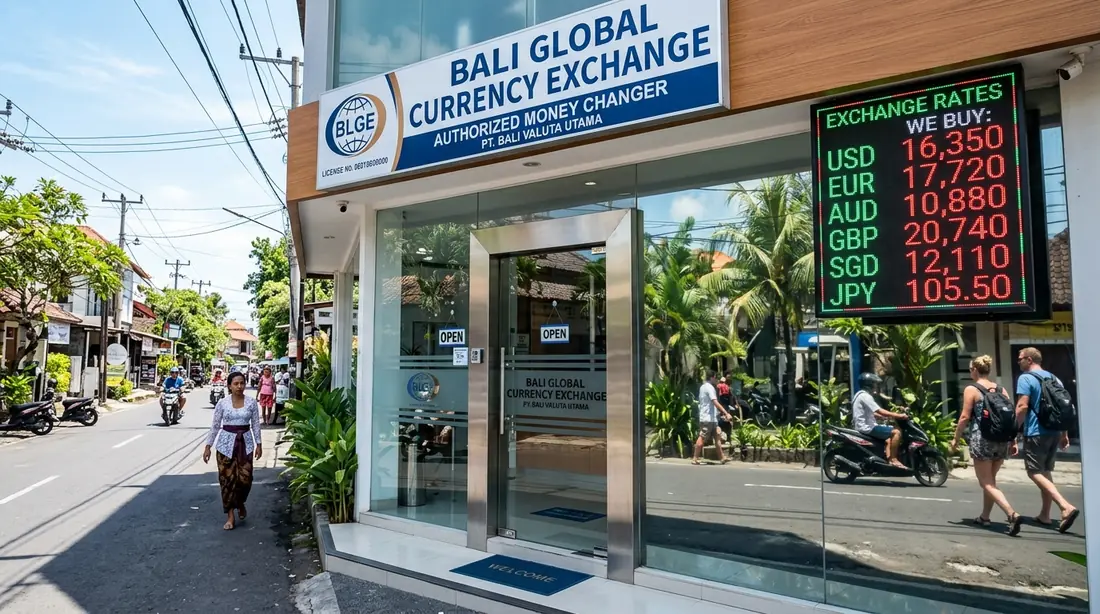
Licensed (PVA Berizin) vs Unlicensed Money Changers
| Feature | Authorized PVA Berizin | Unlicensed Street Stall |
|---|---|---|
| Bank Indonesia Permit | Official certificate & QR code displayed | None or fake laminated badge |
| Exchange Rates | Matches fair mid-market bank rates | Unrealistically high on chalkboard signs |
| Transaction Record | Printed computerized receipt with ID check | Handwritten scrap paper or no receipt |
| Physical Premise | Dedicated office with AC, glass, CCTV | Tucked behind clothing rack or phone stall |
| Counting Process | Counting machine visible in clear sight | Manual sleight-of-hand beneath table edge |
ATMs: Where and How to Withdraw Safely
For most travelers, a bank ATM ends up being simpler and safer than exchanging cash at all, as long as you're using the right kind of machine.
Machines attached to or located inside actual bank branches (BCA, Mandiri, BNI, and BRI are widely available across Bali) carry a meaningfully lower skimming risk than standalone units tucked into alleys, small shops, or dimly lit corners of tourist strips.
A few habits that make a real difference:
- Stick to ATMs physically inside or attached to a bank branch, not freestanding units on the street.
- When the machine asks which currency to charge you in, always choose Indonesian Rupiah, not your home currency. Choosing your home currency triggers dynamic currency conversion, which almost always works out worse for you.
- Cover the keypad with your hand while entering your PIN, a simple habit that defeats most hidden-camera setups.
- If a machine looks tampered with, has a loose card slot, or a keypad that feels different to the touch, skip it and find another one.
Withdrawal limits vary by bank, and pulling a larger amount per transaction (rather than several small withdrawals) generally means fewer fees adding up over your trip.
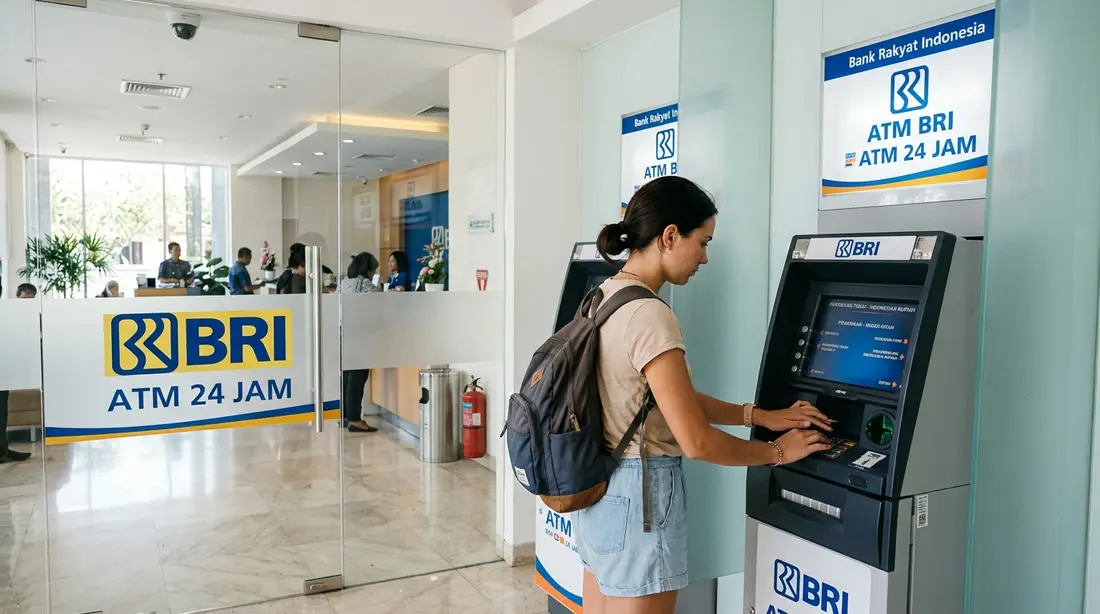
Always select "Without Conversion" (Indonesian Rupiah / IDR) when prompted by an ATM screen. Choosing conversion into your home currency gives the local machine permission to charge an arbitrary 6% to 12% exchange markup. Let your home bank handle the foreign exchange rate instead.
Cash vs Card in Bali
Card payments have become far more common across Bali in recent years, particularly at hotels, larger restaurants, and established shops. QRIS-based mobile payments have also spread widely.
That said, cash still matters more here than in a lot of other travel destinations. Smaller warungs, parking attendants, temple donations, and many independent tour operators still expect cash, especially in smaller denominations.
Carrying a mix of small notes for these everyday costs, alongside a card for larger, planned expenses, tends to be the most practical approach rather than relying entirely on one or the other.
Small Cash for Parking, Tips, and Drivers
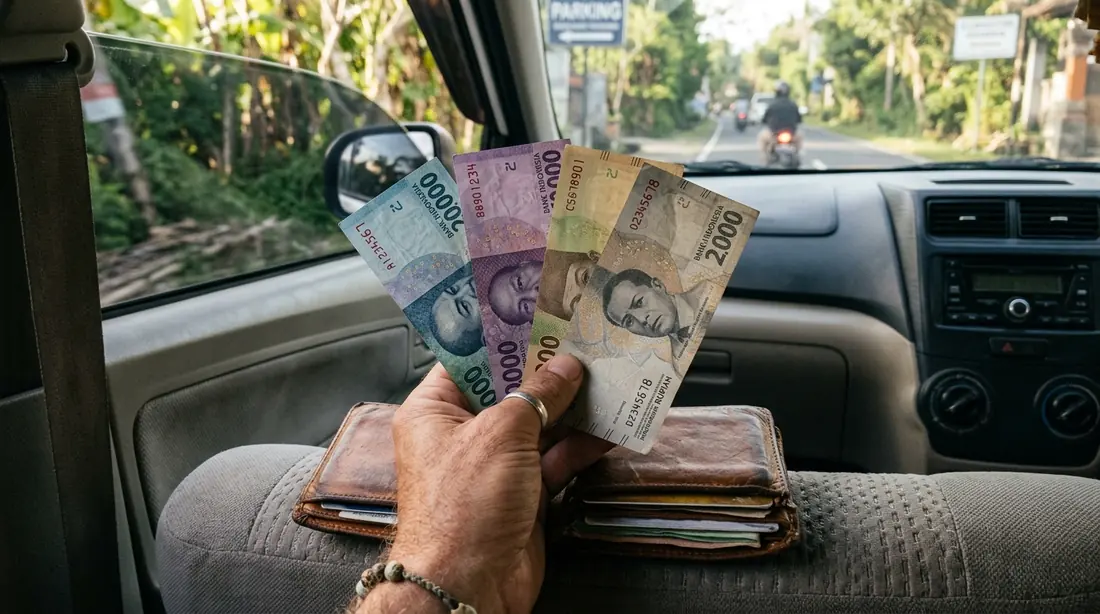
This is a detail that catches a lot of first-time visitors off guard. Parking fees at temples, waterfalls, and viewpoints are almost always small, cash-only amounts, and attendants rarely have change for a large note.
The same goes for tipping a driver or guide at the end of a day, having smaller denominations on hand makes this simple rather than awkward.
If you're traveling with a Bali private driver, this particular friction mostly disappears, since drivers typically handle toll and parking costs directly as part of the day, and you're not stuck fumbling for exact change at every stop.
It's still worth keeping a reasonable amount of smaller notes on you regardless, for the moments when cash is genuinely the only option.
Other Common Money-Related Scams to Know
A few other patterns worth being aware of, separate from currency exchange itself:
Fake taxis mimicking the look of well-known metered taxi brands sometimes charge multiples of the standard rate. Sticking to recognized taxi brands, established ride-hailing apps, or pre-arranged private car charters avoids this fairly reliably.
The "stuck card" trick at ATMs involves a device that traps your card inside the machine. If this happens, someone nearby may conveniently offer to help and suggest calling a number, don't. Contact your bank directly through their official app or website, and report the machine to the branch if there is one attached.
Overly persuasive street vendors occasionally use rushed, confusing math during a sale to shortchange tourists. The same principle applies here as with money changers: slow down, count your own change, and don't feel pressured to move quickly through the transaction.
Who Needs to Think About This Most
Money scams in Bali don't target everyone equally, and a bit of extra caution matters more for some travelers than others:
- First-time visitors unfamiliar with what a legitimate money changer or ATM setup actually looks like.
- Solo travelers, since scams involving distraction or rushed counting are easier to pull off on one person than a group watching out for each other.
- Anyone carrying larger amounts of cash for an extended trip, where a single bad exchange has more impact.
If you're already traveling with a private driver or guide through Bali private tour, many of these situations — parking cash, toll fees, navigating unfamiliar areas — are simply handled as part of the day, which removes a fair amount of this risk before it comes up.
Frequently Asked Questions
How do I know if a money changer in Bali is legitimate?
Look for a visible PVA Berizin (Pedagang Valuta Asing Berizin) certificate and registration number displayed at the counter. Legitimate operators also provide a printed computerized receipt, not a handwritten note.
Is it safer to use ATMs or money changers in Bali?
Both can be safe if you follow basic precautions. ATMs inside bank branches are often considered the simpler, lower-risk option, since you avoid cash-handling scams entirely.
How much cash should I carry in Bali?
Carrying around IDR 300,000 to IDR 500,000 in small denominations (IDR 2,000, 5,000, 10,000, and 20,000 notes) is ideal to cover parking, tips, and small warung purchases day to day.
What should I do if an ATM keeps my card in Bali?
Contact your home bank directly via their official app or international hotline to freeze the card immediately. Never accept help from strangers nearby offering to dial a phone number for you, as this is a known card-trapping scam tactic.
Final Thoughts
None of this requires being paranoid for your entire trip. A handful of habits, checking for the right logo, choosing the right kind of ATM, and counting your cash before you walk away, cover most of the risk.
Bali Nusa Tour's private tours and driver services take a fair amount of this off your plate entirely, since day-to-day cash handling for parking and tolls is generally managed as part of the trip rather than left for you to sort out at every stop. Browse our comprehensive Bali tour packages catalog to organize your island travels with transparent pricing and zero guesswork.
Travel Bali Hassle-Free with a Private Driver
Skip the stress of parking attendants, toll payments, and unfamiliar routes. Enjoy clean private air-conditioned vehicles, transparent pricing, and trusted local drivers.
Chat on WhatsApp with Bali Nusa Tour