Landing in Bali for the first time, most travelers picture themselves cruising along the coast on a scooter, wind in their hair, discovering hidden temples at their own pace. The reality is often a little different.
Uluwatu's roads are narrow, steep, and packed with rental cars inching toward the same clifftop viewpoint at sunset. More than a few visitors end up white-knuckled on a motorbike, GPS signal dropping in and out, wondering if they took a wrong turn three villages back.
This guide is written to save you that stress. We'll walk through what actually makes Uluwatu worth the trip, when to go, and how to get around without losing half your day to traffic or a scooter breakdown on the side of the road.
Why Uluwatu Still Feels Different
Uluwatu sits on the southwestern tip of the Bukit Peninsula, and the geography alone sets it apart from the rest of South Bali.
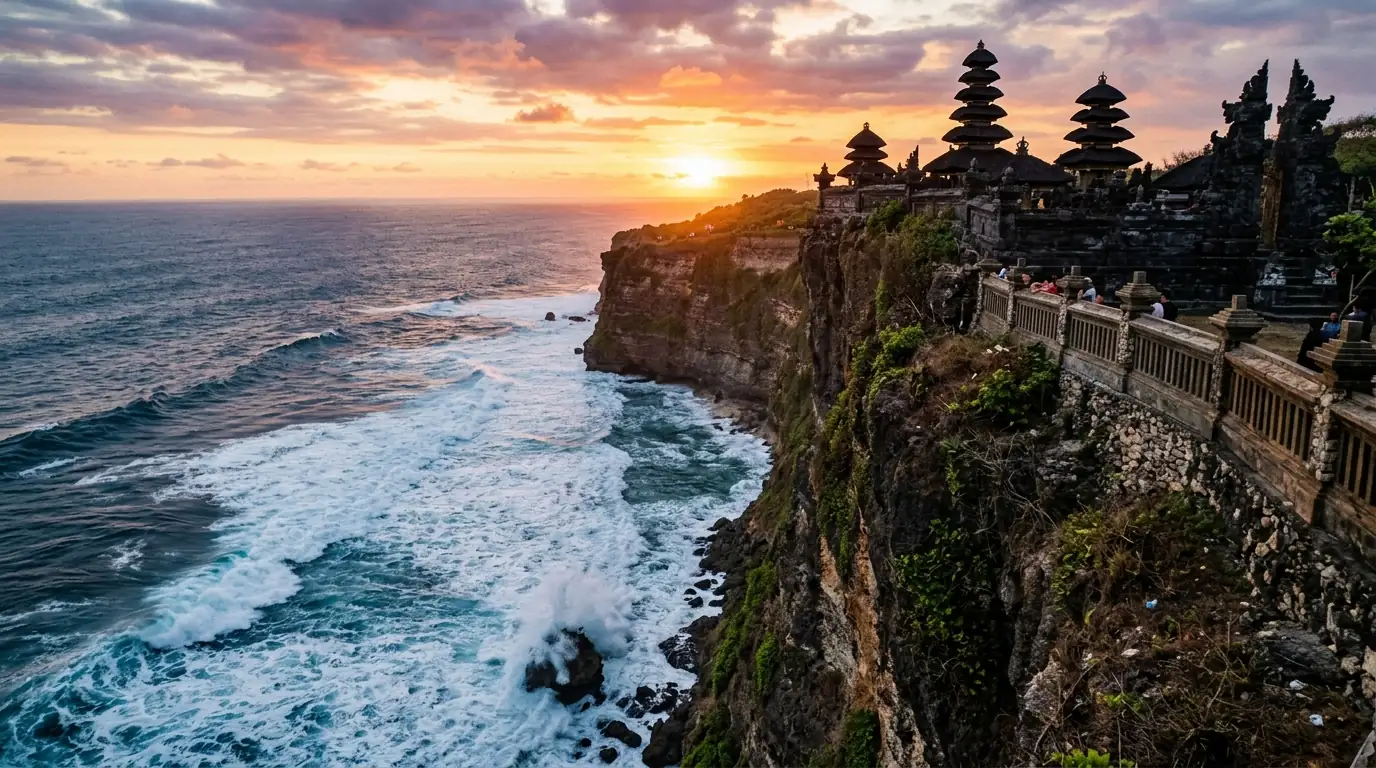
The land drops straight into the Indian Ocean here, sometimes seventy meters down. That's what gives Uluwatu Temple its dramatic setting — a Hindu sea temple perched right on the edge, one of six key directional temples on the island.
Locals treat the site with real reverence, not just tourism polish. If you visit around sunset, you'll notice the energy shift as the Kecak Fire Dance performance begins in the temple's open-air amphitheater, dozens of bare-chested performers chanting in rhythmic unison against a burning orange sky.
It's one of those experiences that photos genuinely undersell.
What to See Beyond the Temple
The temple gets the postcard fame, but Uluwatu's real charm is spread across a handful of spots that most visitors only discover with local input.
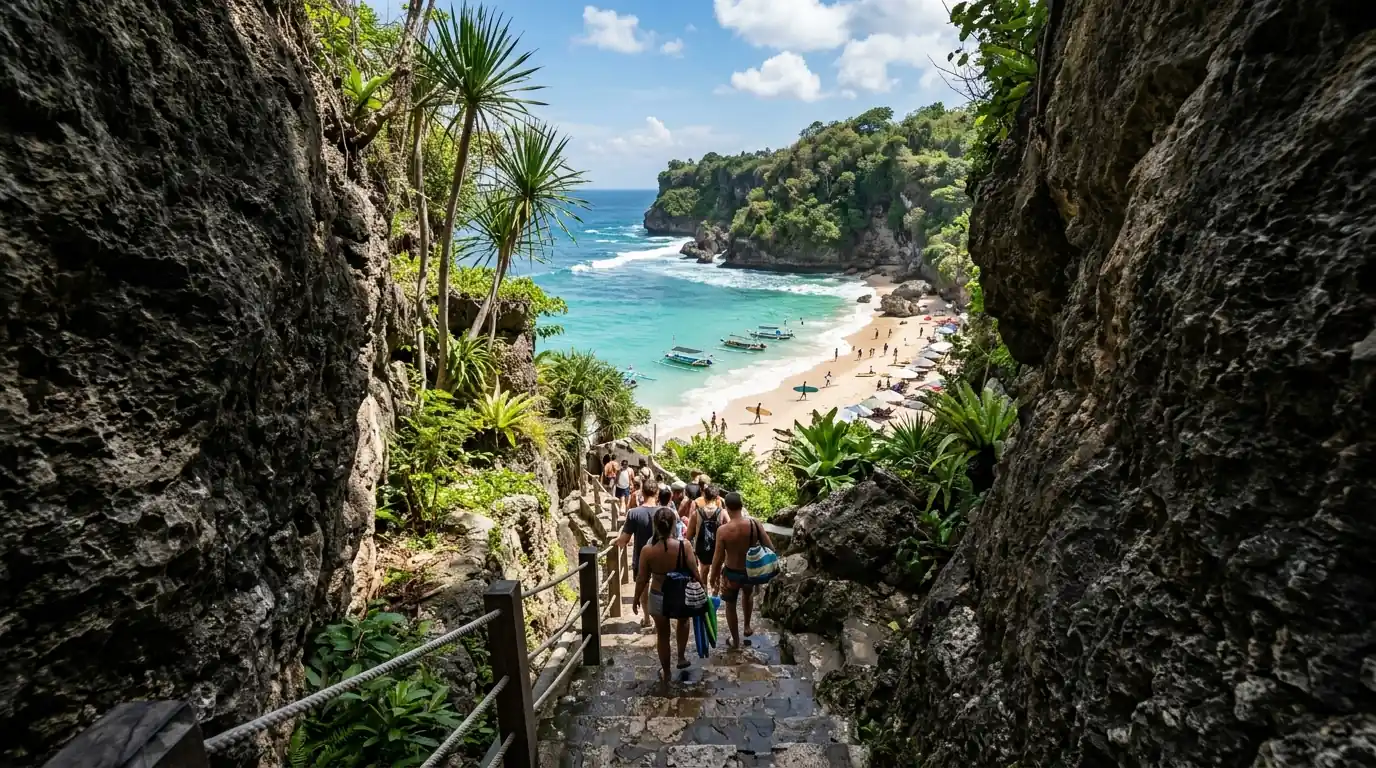
Padang Padang Beach is a small cove tucked beneath limestone cliffs, reached by a short staircase carved into rock. It gets busy by mid-morning, so early arrival matters here.
Suluban Beach sits just below a stretch of cliffside warungs and surf shops, and it's arguably the best place to watch Bali's surf culture up close without paddling out yourself.
Melasti Beach, a little further along, has some of the whitest sand on the peninsula and considerably fewer crowds than its more famous neighbors.
For families or anyone traveling with kids, Garuda Wisnu Kencana (GWK) Cultural Park — home to a 120-meter bronze statue — is worth folding into the same day, since it sits closer to central Bali on the way down to Uluwatu.
Timing Your Visit Right
Here's something most generic travel blogs skip: Uluwatu's best moment is genuinely time-sensitive, not just a marketing line.
The Kecak Fire Dance runs once daily around 6 PM, timed to overlap with sunset. Arriving even 45 minutes early matters, because seating fills up fast and the temple grounds themselves are worth wandering before the show starts.
Morning visits (before 9 AM) are the move if you want the beaches without the crowds — Padang Padang in particular turns into a bit of a scene by late morning as day-trippers arrive in waves.
Weather-wise, the dry season (April through October) gives you the clearest sunset views, though Uluwatu tends to be slightly less humid than Ubud or Seminyak even in shoulder months, thanks to the ocean breeze off the cliffs.
The Getting-Around Problem Nobody Warns You About
This is the part that catches first-time visitors off guard.
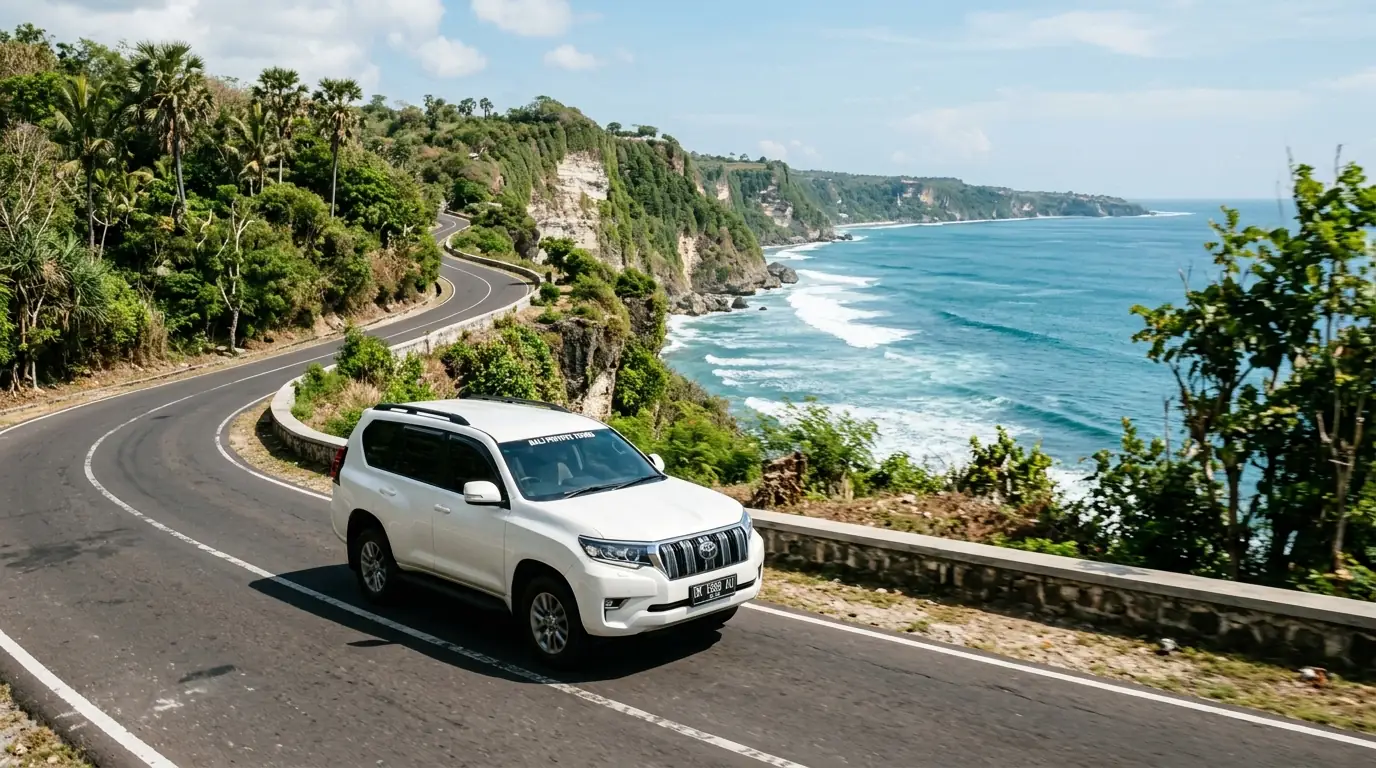
Uluwatu's roads weren't built for the volume of traffic the area now sees. What looks like a 20-minute drive on Google Maps can stretch to 40 or 50 minutes during peak afternoon hours, especially anywhere near the temple entrance before sunset.
Scooter rentals are everywhere and cheap, which makes them tempting. But the terrain here includes genuine hill climbs, blind corners, and drivers who aren't always paying close attention — Bali's road accident statistics involving tourists on rented bikes are not small, and insurance coverage is often murkier than renters realize until something goes wrong.
Taxis and app-based rides work in theory, but availability in Uluwatu specifically can be spotty compared to Seminyak or Kuta, and surge pricing during sunset hours is common.
This is exactly the gap that a bali private driver fills well — someone who already knows which back roads avoid the worst congestion, when to leave for a 6 PM Kecak show, and where it's actually safe to park near the cliffs.
Private Tour vs. Group Tour vs. Going Solo
It's worth being honest about the trade-offs here rather than just pushing one option.
Group tours are budget-friendly and require zero planning, but you're locked into someone else's schedule. If the group wants to leave Padang Padang after twenty minutes and you wanted an hour, that's not really up for discussion.
Going solo (scooter or self-drive car) gives you full flexibility and can genuinely be fun if you're an experienced rider who already knows Bali's roads. The downside is everything mentioned above — traffic stress, navigation uncertainty, and the safety question that's hard to fully shake off.
Private tours land in the middle in a good way: you keep the flexibility of stopping wherever you want, but someone else handles the driving, the route planning, and the local timing knowledge. For a destination as time-sensitive as Uluwatu, that local knowledge alone is often worth the difference in price.
Bali Nusa Tour's approach to this has always been to keep vehicles 100% private — no strangers added to fill a van, no fixed departure time you have to match. If Uluwatu is just one stop on a longer day, a bali tour packages covering multiple South Bali highlights usually works out more efficient than booking each stop separately.
Which Areas Pair Well With Uluwatu
If you're building a full day rather than a single stop, a few pairings work particularly well geographically.
Uluwatu combines naturally with Jimbaran Beach, just a short drive north, known for beachfront seafood dinners right on the sand — a natural way to close out a sunset temple visit.
Travelers based in Seminyak or Canggu often tack Uluwatu onto a broader South Bali loop that includes Nusa Dua and GWK, since the coastal road connects all three reasonably well outside of peak traffic hours.
For visitors wanting more cultural depth on the same trip, some travelers combine an Uluwatu afternoon with a full-day kintamani volcano tour earlier in their stay — different regions entirely, but both represent sides of Bali that are easy to miss if you stick to the beach clubs.
How to Choose a Tour Provider You Can Actually Trust
Uluwatu's popularity has, unfortunately, attracted its share of informal operators offering suspiciously low rates with vehicles that don't quite match the photos online.
A few things worth checking before you book anything:
- Confirm the vehicle and driver details are locked in before you pay, not "assigned on the day."
- Ask directly whether the tour is private or shared — some listings blur this on purpose.
- Look for operators who list clear inclusions (fuel, parking, driver, entrance tickets) rather than vague "all-in" pricing with no breakdown.
- Check how long the business has actually operated locally, not just how new their website looks.
Bali Nusa Tour has been running private tours out of Bali since 2018, and that operating history is exactly the kind of detail worth asking any provider about directly.
Who Uluwatu Actually Suits Best
Uluwatu rewards travelers who don't mind a bit of walking and want scenery over shopping.
Couples and honeymooners tend to love it for the sunset factor alone. Surfers already know the area by reputation. Families with older kids do well here too, especially if GWK is added to the itinerary to break up the temple-and-beach pacing.
It's a slightly less natural fit for travelers who want purely relaxed, low-effort beach time — Nusa Dua or Sanur suit that mood better, with calmer water and flatter terrain.
Final Thoughts
Uluwatu earns its reputation, but it rewards a bit of planning more than most parts of Bali.
Get the timing right for the Kecak performance, budget extra time for the roads, and decide upfront whether you want the flexibility of a private bali tours or the simplicity of a fixed-schedule group option.
Either way, the clifftop sunset is worth building a day around — just don't let the drive there be the most stressful part of your trip.
Explore Uluwatu with a Trusted Local Driver
Skip the traffic headache and steep roads. Book a 100% private car charter with Bali Nusa Tour for your sunset temple and beach day trip.
Book Your Private Driver on WhatsAppWhat is the best time to visit Uluwatu Temple?
The best time to visit Uluwatu Temple is late afternoon around 4:30 PM to 5:00 PM. This allows you to explore the cliffside pathways, secure seats for the 6:00 PM Kecak Fire Dance, and witness the iconic sunset over the Indian Ocean.
How do I get around Uluwatu without a scooter?
The safest and most reliable way to explore Uluwatu without a scooter is by hiring a private Bali driver with a private vehicle. This avoids the stress of steep, winding roads and limited ride-hailing availability during peak sunset hours.
Is the Uluwatu Kecak Dance worth seeing?
Yes, the Uluwatu Kecak Fire Dance is one of Bali's most memorable cultural performances, held in an open-air clifftop amphitheater with dozens of performers chanting against a sunset backdrop.
Things to Do in Uluwatu, Bali
Uluwatu is one of Bali's most rewarding destinations, combining dramatic sea cliffs, ancient temples, world-class surf breaks, and vibrant sunset entertainment. Here are the top things to do when you visit:
- Watch the Kecak Fire Dance at Uluwatu Temple — performed at sunset on a clifftop stage 70 metres above the Indian Ocean
- Visit Pura Luhur Uluwatu — one of Bali's six directional temples, dating back to the 11th century
- Explore Padang Padang Beach — the iconic 'Julia Roberts beach' from the film Eat Pray Love, accessible through a narrow cave
- Surf or watch surfing at Uluwatu's legendary left-hand reef break — best for experienced surfers
- Dine at a cliff-edge seafood restaurant or rooftop bar in Jimbaran or Ungasan
- Swim or snorkel at Bingin Beach — a hidden cove below the cliffs, quieter than the main beaches
- Photograph the Gate of Hell (Pura Dalem Giri Petang) at golden hour
- Watch monkeys interact with temple visitors — they're mischievous but fascinating (keep sunglasses and valuables close)
Uluwatu Full Day Itinerary
Here's a practical full-day Uluwatu itinerary departing from Seminyak or Kuta. Adjust timing based on your accommodation location.
Uluwatu Full Day Itinerary
| Time | Activity | Notes |
|---|---|---|
| 08:30 | Hotel pickup from Seminyak / Kuta | Pickup from Ubud adds ~45 min |
| 09:30 | Garuda Wisnu Kencana Cultural Park | Optional — iconic 121m GWK statue, great for photos |
| 10:30 | Padang Padang Beach | Arrive early before it gets crowded |
| 12:00 | Lunch at a cliff-edge warung | Try Nusa Dua Fish Market or a local Bukit warung |
| 13:30 | Bingin Beach or Suluban Beach | More secluded; good for swimming if swell is small |
| 15:00 | Drive to Pura Luhur Uluwatu | Arrive by 15:30 to explore temple before crowd |
| 16:00 | Kecak Fire Dance performance | Tickets IDR 150,000/person; starts ~18:00 at sunset |
| 18:30 | Jimbaran Bay seafood dinner | Grilled seafood on the beach as the sun goes down |
| 20:00 | Return to hotel | ~45 min drive to Seminyak |
Best Time to Visit Uluwatu
Uluwatu is a year-round destination, but the experience varies by season:
- Dry season (May–September): Best weather, clear skies for sunset photos, peak surf season. Book Kecak tickets early — performances sell out.
- Shoulder season (April, October): Fewer crowds, occasional showers, still good for visiting. Our favourite time for value.
- Rainy season (November–March): Afternoon thunderstorms are common but mornings are often clear. The temple and dance are still beautiful. Fewer tourists.
- Best time of day: Arrive at the temple between 15:00–16:00, watch the sunset and Kecak Dance (~17:30–18:30 start depending on season), then head to Jimbaran for dinner.
How to Get to Uluwatu
Getting to Uluwatu from Major Areas
| From | Distance | Drive Time | Notes |
|---|---|---|---|
| Seminyak | 23 km | 45–60 min | Via Jalan Uluwatu — avoid 16:00–18:00 traffic |
| Kuta / Legian | 18 km | 35–50 min | Via Bypass Ngurah Rai |
| Canggu | 30 km | 50–70 min | Via Beraban or Kerobokan |
| Nusa Dua | 15 km | 25–35 min | Fastest route from south Bali |
| Ubud | 52 km | 90–120 min | Via Bypass Ngurah Rai |
| Sanur | 25 km | 40–55 min | Via Toll Bali Mandara (faster) |
The easiest and most comfortable way to reach Uluwatu is with a private driver. Parking at the temple area is limited, and the roads narrow significantly near Padang Padang Beach. A private car lets you stop at viewpoints, adjust timing, and avoid the stress of navigation.
Uluwatu Temple Entrance Fee & Opening Hours 2026
Uluwatu Temple Entrance Fee 2026
| Ticket Type | Price |
|---|---|
| Foreign tourist (adult) | IDR 50,000 |
| Foreign tourist (child) | IDR 30,000 |
| Indonesian citizen | IDR 20,000 |
| Kecak Fire Dance (separate) | IDR 150,000 per person |
| Sarong rental (mandatory) | Free — included at gate |
Sarong and sash are mandatory and provided free at the entrance. Shoulders should be covered. Remove shoes before entering the inner temple area. Keep valuables inside bags — monkeys at Uluwatu are known to grab sunglasses, hats, and phones.
Opening hours: 09:00–19:00 daily (Kecak Dance performance typically starts at 18:00 and runs for approximately 60 minutes).
Frequently Asked Questions
Is Uluwatu Temple worth visiting?
Yes — Uluwatu is consistently ranked among Bali's top 3 experiences. The combination of 11th-century temple, dramatic ocean cliffs, and the world-famous Kecak Fire Dance at sunset is unlike anywhere else on the island.
How long does it take to visit Uluwatu Temple?
Allow 2–3 hours for the temple and Kecak Dance combined. Add another 1–2 hours if you plan to visit Padang Padang Beach or Bingin Beach nearby.
Can I visit Uluwatu without a guided tour?
Yes, but a private driver is strongly recommended. Parking is limited, roads are narrow, and timing the Kecak Dance perfectly is difficult without local knowledge. Most visitors regret not booking a private car in advance.
What time does the Kecak Fire Dance start?
The Kecak Fire Dance at Uluwatu Temple typically starts at 18:00 and runs for approximately 60 minutes. Arrive at least 30 minutes early to get a good seat. During peak season (July–August), arrive 45–60 minutes early.
Are monkeys at Uluwatu dangerous?
The monkeys are bold but rarely aggressive if you don't provoke them. Keep sunglasses, hats, water bottles, and mobile phones stored in a bag. If a monkey grabs something, do not fight back — temple staff can often negotiate the return of items with food.
What is the best restaurant near Uluwatu Temple?
For sunset views: Single Fin (Suluban cliff), Rock Bar at AYANA (book ahead), or Ulu Cliff House. For after the Kecak Dance: Jimbaran Bay seafood restaurants offer a classic Bali dinner experience 20 minutes away.
Can I swim at Uluwatu?
Padang Padang Beach and Bingin Beach are both swimmable at low tide during small swell (typically in the dry season from May to September). Uluwatu itself is a world-class surf spot — swimming is not recommended during large swell.
How do I book the Kecak Dance at Uluwatu?
Tickets are available at the temple gate (IDR 150,000 per person in 2026). No advance booking needed, but during peak season seats fill quickly. Booking a private tour that includes the Kecak Dance guarantees your entry and seat selection.
Book Your Uluwatu Sunset Tour
Watch the legendary Kecak Fire Dance at Uluwatu Temple with a private car, local driver, and flexible itinerary. Includes hotel pickup, Padang Padang Beach, and optional Jimbaran seafood dinner.
See Uluwatu Tour Details →